Visit us at www.capecodvets.com

Friday, January 23, 2015

Welcome Dr. Angela Jasper! Now Offering Integrative Medicine

We are excited to announce the addition of Angela Jasper, DVM,  CVA.  Dr. Jasper is a 2003 graduate of The Ohio State University Veterinary School of Veterinary Medicine.  After earning her Certified Veterinary Acupuncture License from the IVAS (International Veterinary Acupuncture Society), Dr Jasper has been performing acupuncture since 2006.  In 2008, Dr. Jasper attended Healing Oasis Wellness Center for certification in veterinary spinal manipulation.   
We are thrilled to have Dr. Jasper offering services of acupuncture, spinal manipulation, herbal and nutritional consult, and homeopathic therapy. These integrative therapies will bring a new standard of care for Cape Cod pets. 
Acupuncture can be used to treat a wide array of maladies including musculoskeletal, skin, respiratory, gastrointestinal, and some reproductive problems.  It can be used either as a standalone or integrative therapy.  It can also be used short term for a simple acute problem, or chronic ailments on ongoing treatment.  Physiological effects of acupuncture include nerve stimulation, blood circulation, relief of muscle spasm, and the stimulation of the body’s own hormones. The goal in many cases is to reduce the amount of oral medications are patients receive.
Veterinary acupuncture utilizes various forms of needles to stimulate acupuncture points.  We can also use acupuncture needles to conduct low currents of electricity to stimulate the tissues (electroacupuncture).  When choosing an acupuncturist for your pet an owner needs make sure the practitioner is a licensed veterinarian and has specific training and experience.  Any person performing acupuncture should have formal training from an accredited certification program. 
Please stay tuned for more information on the integrative therapies now being offered! Please consult with your primary veterinarian about how alternative therapies may benefit your pet.  And please call to book a consultation with Dr. Jasper who will be starting appointments in February!

Wednesday, December 17, 2014

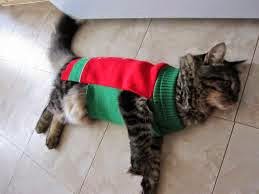
Cats in Holiday Sweaters!

Click on the link below to witness more of this:


Just in case you need some help getting into the holiday spirit.
http://www.sciencedaily.com/videos/eb99206697fb3f88c8e7c46a3643fd66.htm

Wednesday, November 26, 2014

Happy Thanksgiving!!!!

Happy Thanksgiving from all of us at Veterinary Associates of Cape Cod. Travel safely if traveling, enjoy your family and friends, eat enormous amounts of food, but most importantly, 
BE THANKFUL!

Condition Spotlight: Seizures

A seizure can be defined as an abnormal electrical discharge in the brain.  Both dogs and cats can have seizures, but it is far more common in dogs. Although any breed of dog can have a seizure, it appears to be more common in these certain breeds:

  • Beagles
  • Bernese Mountain Dogs
  • Cocker Spaniels
  • Collies
  • German Shepherds
  • Golden Retrievers
  • Irish Setters
  • Labrador Retrievers
  • Poodles
  • Miniature Schnauzers
  • Saint Bernards
  • Fox Terriers
    (list courtesy Vetstreet)
       A seizure can have many causes.  Hypoglycemia (low blood sugar), toxicity, liver disease, tumors, or trauma can all cause your pet to have a seizure.  When a cause of the seizures can’t be found it is called idiopathic epilepsy. Idiopathic epilepsy, an inherited condition, is the most common cause of seizures in dogs.
     When your pet has a seizure, try to move them to a clear area on the floor if you can safely do so.  Pets do not swallow their tongue during a seizure so do not attempt to put your fingers in their mouth or you may be badly injured.  Try to remember to keep track of how long the seizure lasts.  A seizure that goes on for more than 5 minutes requires immediate veterinary attention! Seizures are scary to watch, but are not considered to be painful to your pet. However your pet will most likely feel confused and frightened afterwards.
      If your pet is having seizures, you should get him or her to your vet for an exam as soon as possible.   He/she will do a complete physical exam and perform some laboratory tests to determine the cause of the seizures.  As mentioned earlier, epilepsy is often idiopathic, or of unknown cause, so the exam and test results may come back as normal.
If your pet has a severe grand mal seizures, has several small seizures in a row, or continues to have more than one seizure a month, your veterinarian may want to pet your pet on an anti-seizure medication such as phenobarbital or potassium bromide.  These medications will require that you bring your pet back to the vet for continuous lab work to monitor for any adverse side effects.

Wednesday, November 12, 2014

Project Samana 2014


    I just returned from my second, and not my last, trip to the Dominican Republic. As many of you know Dr. Labdon started Project Samana in 1992. Project Samana provides veterinary care to both small and large animals on this remote peninsula in the Dominican Republic. Every six months a group of veteranarians, technicians, students, and hard working assistants combining to about 15-20 people, gather from all over the U.S. to contribute their skills and make a difference.
    Samana is far from lacking in tropical beauty, but the people are incredibly poor. It really gives the whole "first world / third world problems" a new meaning. Something I truly believe many of us could use a lesson on. This trip really puts my "issues" in perspective. Not to mention the utter gratitude towards each team that visits. Hundreds of people come from miles away to have their pet spayed, neutered, and/or surgically repaired. Sitting patiently in the oppressive heat for hours on end without a single complaint. They are undoubtedly grateful for our services, and I can honestly say, there is no feeling quite like it.
   Once we arrive in Samana, or first order of business is having a meeting. That way we can introduce ourselves and get a little background on everyone we will be working with that week. After the meeting we eat and attempt a good nights sleep to prepare for day one of Project Samana.
    The team, along with some amazing local volunteers, divides up to make a check in/information area, a surgery prep team, surgeons, recovery team, and a discharge area. On this trip, and any given trip, we typically work on 50 to 70 animals a day! No that is not a typo. We really put all  our compassion and skills together and push hard every day. Except Wednesday. We get Wednesday off to enjoy hiking, horseback riding, beaches, ziplines, or just relaxing by the pool. Wednesday is much needed after the first two days. It also helps us get ready for Thursday and Friday.
    This year our total number was 277 in 3 1/2 days. Primarily spays and neuters, although there is always a leg amputation (or two) and wound repairs as well. The half day on Friday is to take inventory to know what is needed next time, followed by a extraordinary sunset catamaran cruise. It is astonishing to me how close you can become with people you've never met before in 6 days. We all start off with one thing in common, but we end up like family.
     I would like to thank everyone that has contributed large or small to Project Samana. Whether a donation, your time, or just a simple thank you to those who have been. I would also like to thank Dr. Burns for sending myself and several other technicians over the years as well as all the supplies given from VACC to make it happen. Most of all, I would like to thank Dr. Labdon. You are an inspiration to all of us.  Project Samana is absolutely a life changing trip and I am proud to be a part of it.


Friday, October 31, 2014

A Handful of Books to Help Get Through The Cold Months


“The Art of Racing in the Rain” by Garth Stein

download (2)

 A heart-warming and inspirational tale in which Enzo, a loyal family dog, tells the story of his human family, how they nearly fell apart, and what he did to bring them back together.


 "Thunder Dog" by Michael Hingson
 
download (4)

This is the true story of a blind man and his seeing eye that were working in the World Trade Center the day of the terrorist attacks.


 "Unsaid" by Neil Abramson

“Unsaid is an extraordinary story of animals, afterlife, and the power of love. I found myself captivated by the world of this book. It will make you remember, rethink, and rejoice in every meaningful relationship you’ve ever had. Everyone needs to read this book!”
Garth Stein - The Art of Racing in the Rain


"Marley and Me" by John Grogan

“A dog has no use for fancy cars or big homes or designer clothes. Status symbol means nothing to him. A waterlogged stick will do just fine. A dog judges others not by their color or creed or class but by who they are inside. A dog doesn't care if you are rich or poor, educated or illiterate, clever or dull. Give him your heart and he will give you his. It was really quite simple, and yet we humans, so much wiser and more sophisticated, have always had trouble figuring out what really counts and what does not. As I wrote that farewell column to Marley, I realized it was all right there in front of us, if only we opened our eyes. Sometimes it took a dog with bad breath, worse manners, and pure intentions to help us see.”
John Grogan


"Inside Of A Dog" by Alexandra Horowitz


Cognitive scientist Alexandra Horowitz gives us a glimpse inside the mind of man’s best friend.


"Oogy" by Larry Levin
 
There was something about Oogy that made him special. Perhaps it was the missing ear, or the asymmetrical face, or the hapless look of a rescued pup who not long before had been used as bait for pit bull warriors. Whatever the qualities, it convinced Larry Levin and his twin sons to adopt this hapless, ugly pooch and make him part of their household. A heart-tugging saga for anyone who can't resist the plaintive, upturned eyes. A word of mouth bestseller now in a paperback edition that contains a new afterword.
-Barnes & Noble

Friday, October 3, 2014

Hot Spots

A hot spot is a localized area of skin inflammation and infection. The infection can be superficial or deep. Other common names for this condition include: moist dermatitis, and acute moist dermatitis.
The medical name is pyotraumatic dermatitis. Broken down, "pyo-" refers to "pus", "-traumatic" refers to self-inflicted trauma of biting, licking, scratching, and so on, and "dermatitis" means inflammation of the skin. These common skin lesions are usually caused (and made worse) by biting, licking, or scratching.
Signs of a hot spot include redness, oozing, pain, and itchiness. Sometimes hair can mat over the lesion, obscuring the size and degree of the problem. These lesions can appear suddenly, and grow within hours.
There usually is, but not always, an underlying  factor to initiate the extreme licking and scratching behavior. Check your pet for fleas, insect stings or bites. Food allergies, scrapes or wound from rough play are also common causes. Some animals have also been known to start a hot spot out of boredom or stress-related psychological problems.
Since hot spots go from bad to worse so rapidly, the best thing to do for you and your pet is bring him or her to your veterinarian as soon as possible. Even if it's small. You don't want it to escalate to a more painful and traumatic experience.
At the clinic, technicians will shave, scrub, and powder the inflamed area, while you and the veterinarian will try to figure out the cause and what steps to take from there. Most of the time antibiotics and an elizabethan collar are necessary. If they are really awful, some doctors will prescribe something for the itch as well. Whatever it takes to make our friends comfortable!
Most hot spots are a "one and done" visit as long as the owners comply with home care instructions.

       
Chewing.
Scratching.     
Time for the doctor.
 
Humiliation. 


 HAPPY DOG!!!