WHERE STATE-OF-THE-ART MEETS STATE-OF-HEART
WE HAVE A FUNDAMENTAL COMMITMENT TO EXCELLENCE IN VETERINARY MEDICINE AND COMPASSIONATE CARE
OUR WELL-EDUCATED TEAM IS COMMITTED TO ENHANCING THE HUMAN-ANIMAL BOND
WE BELIEVE PETS ARE NOT JUST ANIMALS, BUT INTEGRAL MEMBERS OF OUR FAMILIES
WE ADHERE TO THE HIGHEST ETHICAL AND MEDICAL STANDARDS BEFITTING OUR COMPANIONS,
WHILE MEETING AND EXCEEDING OUR CLIENTS' EXPECTATIONS
Wednesday, March 28, 2012
Understanding Canine Vestibular Syndrome
Thursday, March 22, 2012
Calming Clothing for Anxious Pets

Thursday, March 15, 2012
Toxoplasmosis
Toxoplasmosis is an example of a disease that can be transmitted between animals and humans, also known as a zoonotic disease. The disease is caused by the single-celled parasite Toxoplasma gondii. Officials at the Centers for Disease Control and Prevention (CDC) estimate that as many as 60 million people in the United States are infected with this parasite. Fortunately, most Toxoplasma gondii infections are kept under control by the immune system, provided that the infected person is otherwise healthy. People with compromised immune systems and children under 5 are particularly at risk of developing more serious symptoms and should seek medical treatment if toxoplasmosis is suspected. Women who are pregnant should also be especially cautious because toxoplasmosis can be dangerous to the unborn fetus.
As illustrated in the diagram below, the parasite that causes toxoplasmosis is commonly carried by cats, rodents, and other animals. Cats can become infected by eating infected rodents, or undercooked meat that is infected.

Humans can also become infected by eating undercooked meat. Additional hazards include accidental ingestion of cat feces (from the litter box or garden soil), blood transfusion, or organ transplant.
How Can I Avoid Toxoplasmosis?
To avoid toxoplasmosis, make sure to wash your hands with soap and warm water after handling raw meat or cleaning your cat's litter box. It is also important to wash your hands well after gardening, and to make sure fresh vegetables are thoroughly washed before consuming them. Avoid eating undercooked meat, and do not feed undercooked meat to your cat. Keep cats and other animals out of children's play areas. If you have a sandbox outside, keep it covered when not in use. Clean the litter box daily as Toxoplasma gondii does not become infectious until 1 to 5 days after it is shed in the cat's feces. If you are pregnant or immunocompromised do not clean the litter box. If no one else is available to do the chore, wear disposable gloves and wash your hands well with soap and warm water. It is also a good idea to keep your cat inside and avoid holding new cats or kittens if you are at higher risk for toxoplasmosis.
Will Toxoplasma Make My Cat Sick?
Like humans, most cats do not show symptoms following an infection with Toxoplasma gondii. If your cat becomes infected, the parasite will be shed in your cat's feces for a few weeks, after which time the infection should resolve on its own. If your cat is already infected with another disease such as feline leukemia, feline infectious peritonitis (FIP), or feline immunodeficiency virus (FIV) it will be at greater risk of developing more serious symptoms of toxoplasmosis. These cats should be kept indoors to avoid a concurrent Toxoplasma infection. If you are concerned about your cat's health, see your veterinarian, or come see us here at Veterinary Associates of Cape Cod
Wednesday, March 7, 2012
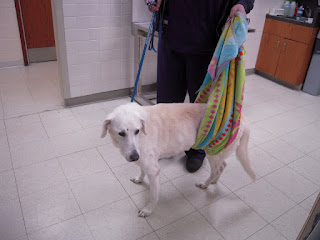
Veterinary Rehabilitation
- Osteoarthritis
- Obesity
- Vestibular disorders
- Hip or elbow dysplasia
- Cruciate injuries
- Back injuries
- Fractures
- Tendon, nerve, or muscle injuries
- Patellar luxation

Thursday, March 1, 2012
Dealing With the Loss of a Pet

Friday, February 24, 2012
Feline Obesity

- Put the food dish on an upper level of the house, so the cat has to climb the stairs to get to it.
- If your house doesn't have an upper level, feed the cat on a platform, or split the meal into several bowls so the cat has to walk around the house to get the whole meal.
- Play games with toys that encourage the cat to use her predatory instincts. Laser pointers and fishing rod toys are irresistible to most cats.
- Use a puzzle feeder. These toys are designed so the cat has to roll them around to get the food out.
- Set aside a portion of the cat's meals to use as post-playtime snacks. A cat will be more likely to play if she learns she will be rewarded.
If you are feeling frustrated with your cat's weight loss plan talk to your veterinarian, or come see us here at Veterinary Associates of Cape Cod!
Friday, February 10, 2012
Onions: More Than Just Bad Breath!
Pieces of onion, onion powder, or even cooked onion can cause damage to red blood cells which could result in anemia in both dogs and cats. Cats are especially sensitive to toxicity because their liver is missing an enzyme normally found in dogs and humans. The primary toxic component in onions (n-propyl disulfide) is in all members of the onion family to varying degrees. Garlic for example is often used as a natural substitute for flea repellent. Garlic contains a much smaller amount of n-propyl disulfide than onions, however it is still not recommended given the potential for toxicity.
Clinical signs associated with onion poisoning include anemia, hemoglobinuria (the presence of hemoglobin in the urine), vomiting, weakness, and pallor. Treatment of onion poisoning will generally begin by inducing vomiting and feeding activated charcoal, depending on how much time has passed since the onions were ingested. Afterwards, the animal should be monitored for the development of hemolysis (the destruction of red blood cells) and azotemia (a condition in which the patient's blood contains abnormally high amounts of urea, creatnine and other compounds rich in nitrogen). Critical patients may require whole blood transfusions and fluid diuresis.
The best way to avoid food toxicity in pets is to avoid table scraps altogether. However, sometimes our pets find ways of getting food even when we don't want them to. When this happens, it is important to take the right steps early on to avoid a serious medical condition later. If you suspect your pet may have ingested something toxic, you can always call the pet poison helpline at 1-800-213-6680, then call your veterinarian!